The first time someone waves you toward a riverbank during Chhath, you get about three seconds to decide whether to step closer or hold back. Nepal festival etiquette lives in moments exactly like that: fast, specific, and impossible to fake. This guide skips the festival histories and ritual meanings, which the Dashain, Tihar, and Chhath guides already cover, and hands you the behavior instead, sorted by the situations you will actually find yourself in.
What respectful Nepal festival etiquette looks like
A visitor who stands quietly at the right distance, uses the right hand, and keeps the camera low reads as respectful without a word of Nepali. The opposite also holds: a warm, chatty tourist who steps over a doorstep lamp or touches an offering has caused real offense, good intentions and all. Learn the concrete actions, and the goodwill takes care of itself.
Reading the room before you arrive
Ceremony or spectacle: the line most visitors miss
Not every festival moment is open to you, and a public setting does not always mean a ritual is open for participation. A masked dance winding down a public street may have religious meaning: watch from the crowd, but do not join the performers unless invited. A family bent over a shrine with lit lamps and an officiating priest is a ceremony, and you observe from the edge unless someone invites you in. When in doubt, watch what other onlookers do and match their distance.
Open spaces and closed ones
Festival settings layer public and private zones that look continuous but are not. Public ghats, temple courtyards, and street routes welcome you. Inner sanctums and private home puja rooms do not. The boundary is rarely signposted, so treat any threshold, rope, or tight cluster of worshippers as a line you do not cross without a clear gesture inviting you across.
Temple and sacred site etiquette
Shoes off, clockwise, and where to stand
Remove your shoes before entering a temple, along with any leather items like belts or bags where asked. Move clockwise through the space, keep to the outer edge where rituals are underway, and never point the soles of your feet at a shrine or a person. That last rule holds even when you are sitting on the floor.
Pashupatinath: the boundary you cannot cross
Non-Hindus cannot enter the main sanctum of Pashupatinath. Full stop. What you can do is better than it sounds: from the eastern ghat area, climb the stairs to the terraces on the far bank of the Bagmati, which open up an elevated view across the temple roofs and the Arya Ghat below. Aim to be on the terraces by around 5:30 PM for the evening aarti, when oil lamps and chanting fill the river's edge. Knowing the route in advance spares you the awkward turnaround at a gate you were never going to pass. Any entry fee you hear quoted changes often, so confirm the current figure at the gate rather than trusting a number from an article.
Boudhanath: direction is the whole rule
At Boudhanath, keep the stupa on your right and walk clockwise. One full kora takes roughly fifteen minutes at an unhurried pace. Spin the prayer wheels clockwise too, with your right hand, and give each one a steady turn rather than a fast flick. Every rotation is meant to carry the mantra, not clock a lap time.
How to dress for Nepali festivals
At Hindu temples
Covered shoulders and knees are the working minimum. No tank tops, no shorts, no short skirts within temple grounds. "Covered" is literal: a scarf thrown loosely over bare shoulders counts, while a sheer layer that still shows skin does not.
At Buddhist monasteries
Monastery courtyards can be stricter than you expect. Kopan Nunnery asks visitors to bring a light shawl for shoulder coverage and explicitly bars spaghetti straps, visible bra straps, sleeveless tops, and miniskirts. Pack a shawl for monastery days and you are covered at nearly every Buddhist site, Kopan and Shechen included.
Processions and home visits
For street processions and home visits, the bar is lower but not zero: clean, modest clothing that covers shoulders and knees. Heading into a home means slipping your shoes off at the door anyway, so wear something easy to remove.
Tika, prasad, and deusi bhailo
Receiving tika
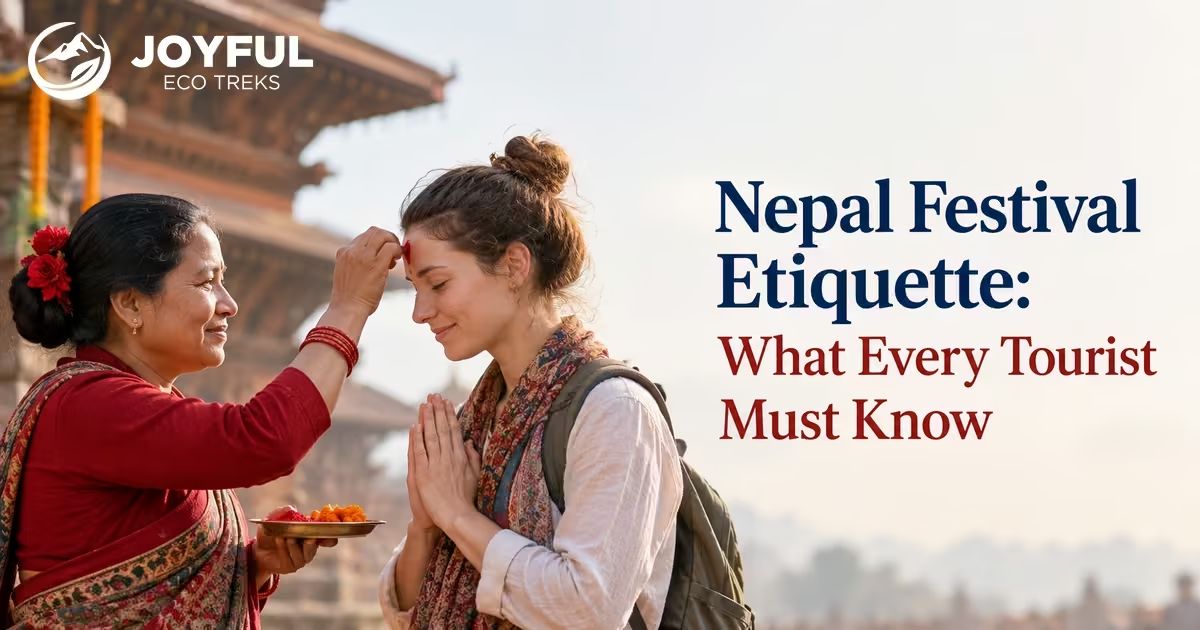
During Dashain and Vijaya Dashami, an elder may press tika onto your forehead. Bow your head slightly, accept with your right hand if anything is passed to you, and do not wipe it off in front of your host. If you would rather not receive it, thank your host and decline gently instead of treating the offer casually.
Accepting and declining food
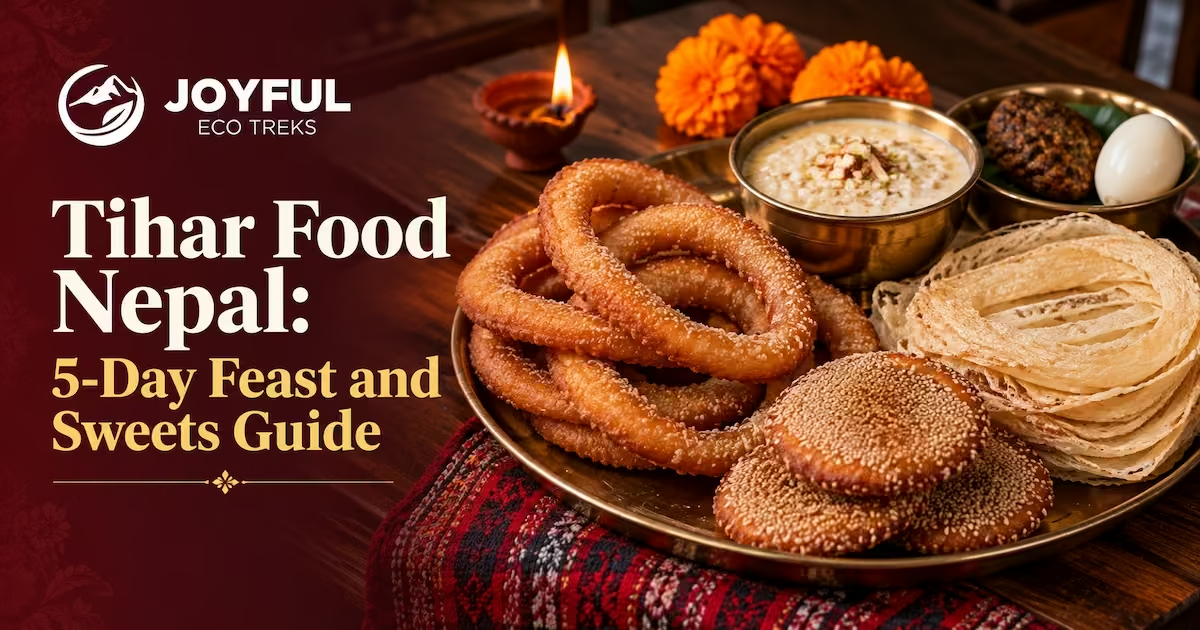
Always receive prasad and festival food with your right hand. In Nepali custom, the left hand is reserved for personal hygiene, so giving or taking food with it reads as unclean. When a dietary restriction genuinely rules something out, thank the giver, explain briefly if needed, and say dhanyabad (thank you). A gentle refusal respects the offer without forcing you to eat. Thekua, the crisp fried wheat-flour cake handed around at Chhath, is meant to be shared, so take it freely when you can.
When a deusi bhailo group reaches your door
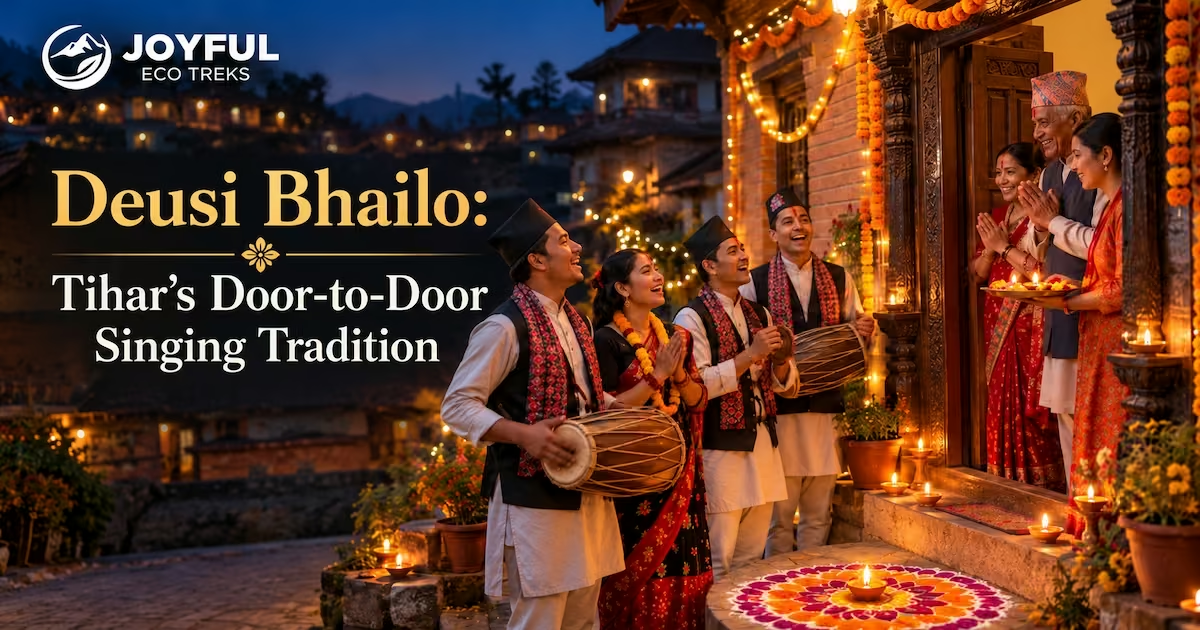
During Tihar, singing groups go house to house, and they reach guesthouses too. At a guesthouse, the owner usually handles the exchange, so you can simply enjoy the performance. To give dakshina yourself, ask your host what is typical in that neighbourhood, then offer an amount you are comfortable with. Give it to the group leader with both hands, or your right hand alone, never tossed. Declining politely causes no offense, which is worth knowing before the music starts.
Photography: when to ask and when to stop
Asking without breaking the moment
Catch the person's eye, lift your camera slightly, and wait for a nod. A smile and a raised camera ask the question in any language. If no one looks up because a ritual is underway, lower it and move on.
Private home pujas, Chhath ghats, and cremation grounds need extra care
Some moments are simply not photo opportunities without permission. Private home pujas and cremations at the ghats call for special care, while public Chhath ceremonies can be photographed respectfully from a distance where permitted. At Chhath especially, the water's edge during offerings is sacred ground: avoid close-ups of worshippers and offerings, and follow instructions from families and organisers.
Flash, drones, and livestreams
Never use flash inside a temple or during a ceremony. Drones over festival crowds and sacred sites are intrusive and increasingly unwelcome, and livestreaming a private ritual without asking crosses the same line a flash does. When a moment feels solemn, trust that instinct.
Mistakes visitors make, and the easy fixes
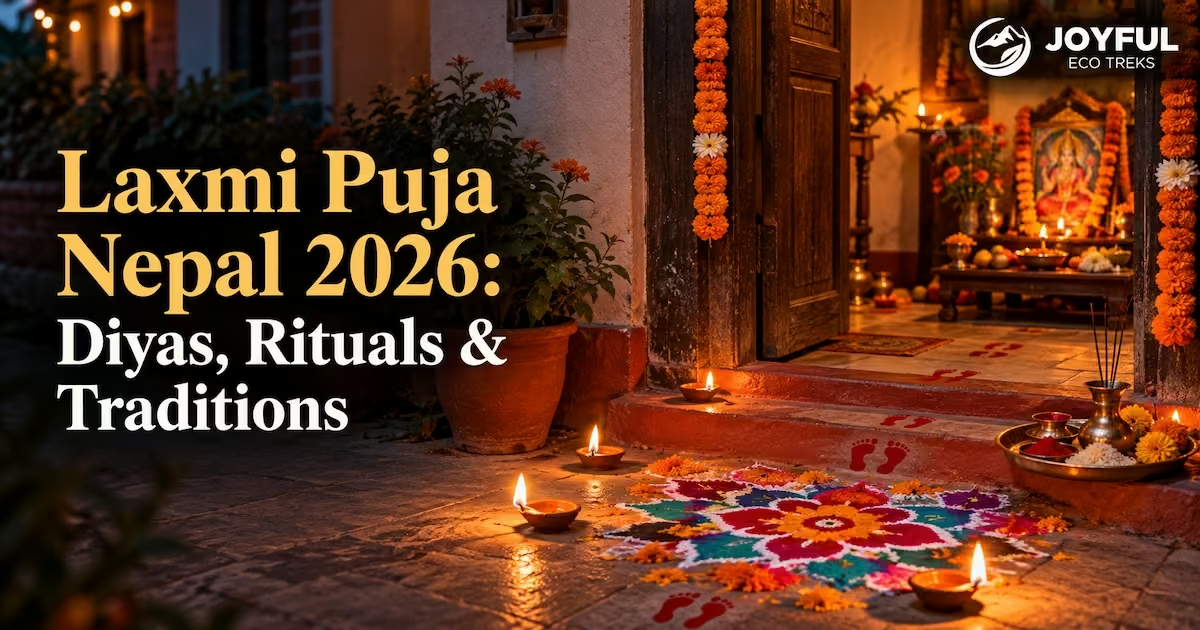
Stepping over the oil lamps and red footprint trail at a Tihar doorway is the big one. Those lamps mark the path Goddess Laxmi is meant to follow into the home, so stepping across them means walking on her route, not just brushing a custom aside. Always walk around them. Touching offerings is another common error. During Chhath the soop tray holds bananas, coconut, sugarcane, sweet potato, flowers, and lit lamps, all arranged for worship, so leave the offerings untouched. Look, do not reach. The rest are smaller: blocking a procession for a photo, wearing shoes into a home, passing money with the left hand. Each fix is a single deliberate choice.
Etiquette by situation: four moments you will face
Scan this on arrival day. Each scenario gives you the one rule you would not guess.
Watching a street procession. Stay at the edge and let it pass. Never cut through the line of participants to reach the other side, even when the gap looks wide and inviting.
Invited into a home during puja. Shoes off at the door, and bring a small gift such as fruit or sweets. Step around, never over, anyone seated on the floor or any lamp burning near the shrine.
Standing at a Chhath riverbank. Keep to the public viewing area, follow any local requests to remove shoes, avoid eating beside the worshippers, and do not touch the soop trays, baskets, or offerings lined up at the water. The rule is simple: watch without entering the ritual space.
Walking a Tihar-lit neighbourhood at night. The diyas and rangoli on every threshold mark Laxmi's pathway into the house. Walk around them, and never step over a lamp set on a doorstep.
Questions visitors ask about Nepal festival etiquette
Can non-Hindu tourists receive tika during Dashain?
Yes, and accepting it is generally a respectful move. Tika offered to a visitor is a blessing, not a religious test, so bow your head and take it graciously if you are comfortable. If not, thank your host and decline politely.
Is photography allowed during Chhath Puja at the riverbank?
Yes, when photography is permitted and you keep a respectful distance. The water's edge during offerings is sacred, so ask before photographing worshippers up close and never touch the soop trays. Follow local instructions and put the camera down if someone objects.
Do you remove your shoes to watch a festival street procession?
No. Shoes stay on in public streets. Remove them before entering temples, monastery interiors, and homes, not for an outdoor procession.
What should you bring if invited to a Nepali home during a festival?
A small, simple gift: seasonal fruit or a box of sweets works well. Hand it over with your right hand or both hands, and expect to take your shoes off at the door.
How do you politely decline prasad you cannot eat?
Thank the giver, bow your head slightly if appropriate, and say dhanyabad. Explain a dietary restriction briefly if needed. A quiet explanation is better than taking something you cannot eat.
Are the dress rules different at Buddhist stupas and Hindu temples?
The baseline, covered shoulders and knees, is the same, but monasteries can be stricter. Kopan Nunnery asks for a light shawl and bars sleeveless tops and visible bra straps, so carry a shawl on monastery days.
Ready to pick your days? Read the full Dashain or Tihar guide next to plan which specific festival days to attend and what each one brings.