
Mardi Himal Trek
Annapurna, Gandaki Province, Nepal
Group size
1–16 travelers (Private & Small Group)
Overview
The Mardi Himal Trek is a 9-day journey along one of Annapurna’s most scenic ridge trails. The route starts in Kathmandu, continues to Pokhara, and enters the trail from Kande. It then climbs through Deurali, Forest Camp, Low Camp, Badal Danda, and High Camp.
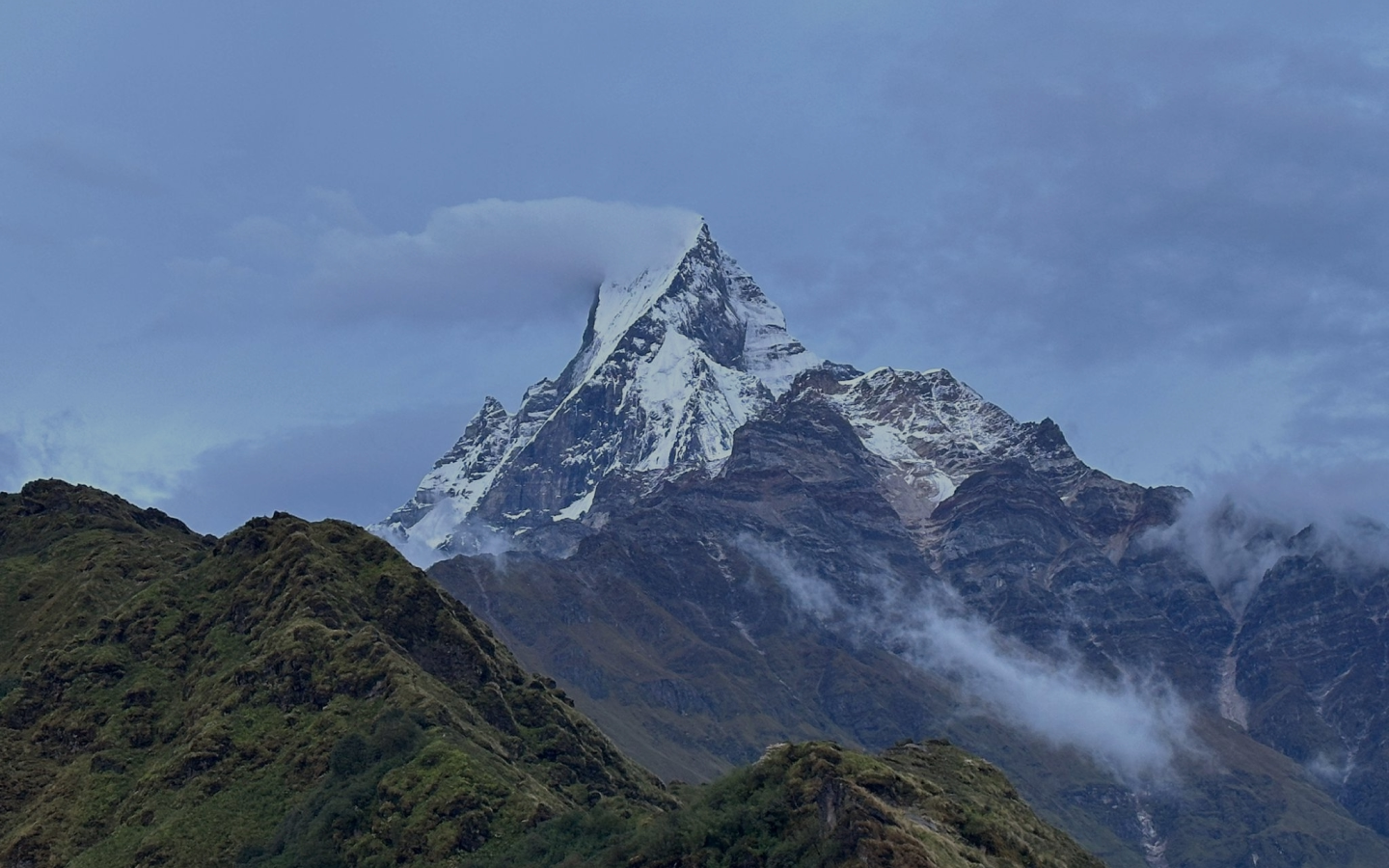
From High Camp, you hike early to Mardi Himal Viewpoint at about 4,200m / 13,780ft. The viewpoint gives sunrise views of Machhapuchhre, Annapurna South, Hiunchuli, Mardi Himal, and nearby ridges. The route then descends along Badal Danda, known for cloud-sea views, before reaching Siding and returning to Pokhara.
Trip Info
- Trek Starts at
- Kande, after a drive from Pokhara
- Trek Ends at
- Siding, followed by a drive back to Pokhara
- Destination
- Annapurna, Gandaki Province, Nepal
- Trekking Distance
- Approx. 45 to 55 km / 28 to 34 miles
- Activity
- Trekking, hiking + scenic drive + ridge-view walk
- Difficulty
- Moderate
- Best Season
- March to May and September to November
- Maximum Altitude
- Mardi Himal Viewpoint, 4,200m / 13,780ft or Mardi Himal Base Camp, 4,500m / 14,764ft
- Daily Walking Hours
- 4 to 7 hours
- Trek Permits
- Annapurna Conservation Area Permit (ACAP), TIMS Permit
- Meals
- Breakfast, lunch, and dinner during the trek
- Guide & Porters
- Licensed guide and porter available; 1 porter for 2 trekkers

Why Trek to Mardi Himal?
The Mardi Himal route is a good choice if you want a shorter Annapurna trek with strong mountain views and less crowded trails. The trail passes quiet woodland between Deurali, Forest Camp, and Low Camp. Rhododendron, oak, bamboo, and moss-covered trees make this lower section peaceful and shaded.
After Low Camp, the route rises toward Badal Danda and High Camp. The forest slowly disappears, and the ridge opens toward Machhapuchhre, Annapurna South, and Hiunchuli. This quick shift makes the Mardi Himal route feel short, varied, and rewarding.
Trek Highlights
- Start the trek from Kande after a scenic drive from Pokhara.
- Walk through Pritam Deurali, forest trails, Low Camp, Badal Danda, and High Camp.
- Follow a quieter ridge route in the Annapurna Conservation Area.
- See close views of Machhapuchhre (Fishtail), Annapurna South, Hiunchuli, and Mardi Himal.
- Hike early to Mardi Himal Viewpoint for sunrise mountain views.
- Enjoy the open ridge scenery around Badal Danda, often known for cloud-sea views.
- Trek through rhododendron, oak, bamboo, and alpine vegetation zones.
- Descend through forest and village trails toward Siding.
- Complete a short Annapurna region trek without taking a domestic mountain flight.
Tour Plan
Day 01Arrival in Kathmandu
You arrive at Tribhuvan International Airport in Kathmandu, where our team meets you and transfers you to the hotel. After check-in, you get time to rest, freshen up, or take a short walk around Thamel.
Later, our trekking guide meets you for a short briefing about the trek. The guide explains the Mardi Himal route, daily walking plan, road conditions, permits, packing needs and altitude safety.
- Drive duration: 25 to 30 minutes
- Drive distance: 5 to 7 km / 3.1 to 4.3 miles, depending on the hotel location
Note: Use this day to rest, check your gear, and buy any missing trekking items.
Day 02Drive from Kathmandu to Pokhara (822m / 2,697ft) | 7 to 8 hrs
You leave Kathmandu after breakfast and drive west toward Pokhara. The road follows river valleys, hillside settlements, terraced fields, and highway towns along the Prithvi Highway.
You reach Pokhara by late afternoon or evening, depending on road conditions. After hotel check-in, you can walk around Lakeside, enjoy Phewa Lake, and prepare your daypack for the trek starting from Kande the next day.
- Drive duration: 7 to 8 hours
- Drive distance: Approx. 200 to 205 km / 124 to 127 miles
Note: Keep water, snacks, and personal items in your day bag because the road journey is long.
Day 03Drive from Pokhara to Kande and Trek to Pritam Deurali (2,100m / 6,890ft) | 5 to 6 hrs Trek
After breakfast, you drive from Pokhara to Kande, the starting point of the trek. The road climbs past Hemja and Naudanda, with wide views of Pokhara Valley and surrounding hills.
From Kande, the trail climbs through stone steps, forest paths, and small settlements toward Australian Camp. You then continue through Pothana and reach Pritam Deurali, where the Mardi Himal route separates from the busier Annapurna trail.
- Drive duration: 1 to 1.5 hours
- Drive distance: 27 to 30 km / 16.8 to 18.6 miles
- Trek duration: 3 to 4 hours
- Trek distance: 5.5 to 7 km / 3.4 to 4.3 miles
- Maximum altitude: Pritam Deurali, 2,100m / 6,890ft
- Elevation gain: +330m / +1,083ft from Kande
Note: Walk slowly on the stone steps and keep your water bottle within easy reach.
Day 04Trek from Pritam Deurali to Low Camp (2,970m / 9,744ft) | 5 to 6 hrs
You leave Pritam Deurali and enter the quieter Mardi Himal side trail. This section moves away from the main Annapurna route and follows a forested ridge toward Kokar, also known as Forest Camp.
The trail continues through rhododendron, oak, bamboo, and moss-covered woodland before reaching Low Camp. Mountain views stay hidden in the lower forest, but Machhapuchhre starts appearing through clear gaps as you get closer to Low Camp.
- Trek duration: 5 to 6 hours
- Trek distance: 7 to 8 km / 5 to 5.6 miles
- Maximum altitude: 2,970m / 9,744ft
- Elevation gain: +870m / +2,854ft
Note: Keep a light jacket nearby because Forest Camp gets cooler after sunset.
Day 05Trek from Low Camp (2,970m) to High Camp (3,580m)
This is the day when the Mardi Himal trail starts to feel wide and dramatic. You climb through short forest sections before the trees begin to fade, and the views open toward Machhapuchhre and the Annapurna range.
Badal Danda is the standout point of the day, with wide views over the valley and clouds often floating below the ridge. After this scenic stop, you continue toward High Camp, where the trail feels colder, quieter, and more exposed.
- Trek duration: 4 to 5 hours
- Trek distance: 6 to 7 km / 3.7 to 4.3 miles
- Maximum altitude: High Camp, 3,580m / 11,745ft
- Elevation gain: +610m / +2,001ft
Note: Walk at a steady pace, as the air becomes thinner near High Camp.
Day 06Hike to Mardi Himal Base Viewpoint (4,200m / 13,780ft) or Mardi Himal Base Camp (4,500m / 14,764ft) and Descend to Badal Danda (3,210m / 10,531ft) | 6 to 8 hrs
The hike above High Camp starts before sunrise, when the ridge is cold, dark, and quiet. The trail climbs over rocky and open ground toward Mardi Himal Viewpoint, where Machhapuchhre rises directly ahead, and the Annapurna range spreads across the skyline.
The walk to Mardi Himal Base Camp is an optional extension beyond the viewpoint, and the guide allows it only with safe weather, clear visibility, good trail conditions, and a fit group. After the hike, the route descends past High Camp and continues to Badal Danda for the night.
- Trek duration: 6 to 8 hours
- Trek distance: 10 to 12 km / 6.2 to 7.5 miles
- Maximum altitude: Mardi Himal Viewpoint, 4,200m / 13,780ft, or Mardi Himal Base Camp, 4,500m / 14,764ft
- Elevation gain/loss: +620m to +920m / +2,034ft to +3,018ft, then -990m to -1,290m / -3,248ft to -4,232ft
Note: Carry warm layers and enough water, as the upper ridge has no comfortable rest stop like the lower trail.
Day 07Trek from Badal Danda to Siding and Drive to Pokhara (822m / 2,697ft) | 6 to 7 hrs
After the high ridge hike, the route now drops toward the lower Mardi Himal trail. Badal Danda still gives wide morning views, so this is a good place to enjoy one last look at Machhapuchhre, Annapurna South, and the cloud-covered valley below.
The trail then descends through forest, stone steps, and hillside paths toward Siding. Siding is a quiet Gurung village on the lower Mardi Himal route, where the walking section ends. From here, you drive back to Pokhara and return to Lakeside after several days in the mountains.
- Trek duration: 4 to 5 hours
- Trek distance: 9 to 12 km / 5.6 to 7.5 miles
- Drive duration: 2 to 3 hours
- Drive distance: 35 to 45 km / 21.7 to 28 miles
- Maximum altitude: 3,210m / 10,531ft
- Elevation loss: -1,460m / -4,790ft
Note: Use trekking poles on the downhill trail, as the long descent puts pressure on your knees.
Day 08Drive from Pokhara to Kathmandu (1,400m / 4,593ft) | 6 to 8 hrs
After breakfast in Pokhara, the journey returns to Kathmandu by road. The drive follows the same highway route through river valleys, hillside towns, terraced fields, and busy roadside markets.
After reaching Kathmandu, our team will transfer you to the hotel. There you can relax, repack your luggage, or enjoy a final evening in the city. In the evening, we arrange a farewell dinner to celebrate the completion of your Mardi Himal Trek.
- Drive duration: 6 to 8 hours
- Drive distance: Approx. 200 km / 124 miles
- Maximum altitude: 1,395m / 4,577ft
- Elevation gain: +573m / +1,880ft
Note: Keep your passport, money, phone, charger, and travel documents in your day bag during the drive.
Day 09Final Departure from Kathmandu | 25 to 30 mins Drive
Your 9-day Mardi Himal Trek ends in Kathmandu. Our team transfers you from the hotel to Tribhuvan International Airport according to your flight schedule.
If your flight is later in the day, you have time for rest, final shopping, or a short walk around the city. You leave Nepal with memories of High Camp, Badal Danda, the Mardi Himal ridge, and close views of Machhapuchhre.
- Drive duration: 25 to 30 minutes
- Drive distance: 5 to 7 km / 3.1 to 4.3 miles, depending on hotel location
Note: Reach the airport at least 3 hours before your international flight.
What’s Included & Excluded
Cost Includes
- Airport pickup and drop-off service in Kathmandu
- Hotel accommodation in Kathmandu and Pokhara with breakfast
- Kathmandu to Pokhara transfer by private vehicle
- All ground transfers during the trip
- Local teahouse and lodge accommodation during the trekking days
- Full board meals during the trek, including breakfast, lunch, and dinner
- Tea, coffee and seasonal fruits during the trek
- Government-licensed English-speaking trekking guide
- Porter support, depending on the selected package
- Annapurna Conservation Area Permit arrangement
- Government taxes and official paperwork
- Basic first aid kit and oximeter, carried by the guide
- Trekking map for the Mardi Himal route
- Duffel/kit bag, sun hat, and neck gaiter to be returned after the trek
- Welcome and Farewell dinner in Kathmandu
- Spa service in Kathmandu, including sauna, steam, and massage
- Trip completion certificate
Cost Excludes
- International flights to and from Nepal
- Nepal visa fees (USD 30 for 15 days, USD 50 for a month, and USD 125 for three months)
- Travel insurance with high-altitude trekking and emergency evacuation coverage
- Personal trekking gear, clothing, and equipment
- Lunch and dinner in Kathmandu, unless mentioned in the package
- Extra drinks, bottled water, boiled water, tea, coffee, and alcoholic beverages
- Hot showers, Wi-Fi, battery charging, and laundry during the trek
- Snacks, energy bars, and other personal food items
- Shopping, spa, massage, and personal expenses in Kathmandu
- Porter service, if not included in your selected package
- Extra hotel nights in Kathmandu caused by road delays, weather, illness, or personal plans
- Rescue or evacuation costs, which must be covered by your travel insurance
- Tips for guides, porters, and drivers
- Any service not clearly mentioned in the cost includes section
Packing List for Mardi Himal Trek
The Mardi Himal Trek passes through warm lower valleys, cold mountain villages, windy high passes, and remote Himalayan trails. Pack light, but bring enough warm clothing and essential trekking gear for changing weather and long walking days.
Luggage & Porter Guidelines6 items
- Duffel bag or large rucksack, 60L to 70L
- Daypack, 25L to 35L
- Rain cover for daypack
- Waterproof liner or dry bag
- Extra luggage storage in Kathmandu
- Porter weight limit: around 12 kg per trekker, if porter service is included
Clothing8 items
- Moisture-wicking trekking T-shirts, 3 to 4 pairs
- Thermal tops and bottoms, 2 pairs
- Fleece jacket or warm pullover
- Moisture-wicking 4-6 underwear
- Trekking pants, 2 pairs
- Down jacket with hood
- Waterproof or windproof pants
- Waterproof and windproof jacket
Head, Hands & Face6 items
- Sun hat or cap
- Warm beanie or woolen hat
- Neck gaiter or buff
- Lightweight inner gloves
- Warm windproof or waterproof gloves
- UV-protection sunglasses
Medical Kit10 items
- Personal medicines
- Diamox (to prevent and treat altitude sickness), only after doctor’s advice
- Pain relief tablets
- Anti-diarrheal medicine
- Rehydration salts or electrolyte tablets
- Blister pads or moleskin
- Band-aids and medical tape
- Antiseptic wipes
- Muscle rub or anti-inflammatory cream
- Tweezers
Snacks & Money8 items
- Energy bars
- Nuts or chocolate
- Electrolyte powder
- Cash in Nepali rupees
- Passport copy
- Travel insurance copy
- Trekking permit copies, if provided
- Zip-lock bags or dry bags for small items
General Trekking Gear7 items
- Four-season sleeping bag, rated to around -10°C to -15°C
- Sleeping bag liner, optional
- Trekking poles
- Dry bags or zip-lock bags
- Water bottles or hydration bladder, at least 2L capacity
- Water purification tablets, drops, or a filter
- Small lock for a duffel bag
Footwear & Socks5 items
- Broken-in waterproof hiking boots
- Camp shoes, sneakers, sandals, or Crocs
- Trekking socks, 4 to 5 pairs
- Warm wool socks for sleeping
- Gaiters, optional for snow or muddy trails
Electronics4 items
- Headlamp with extra batteries or a charging cable
- Power bank, 20,000mAh or higher
- Phone and charging cable
- Camera, optional
Toiletries & Personal Care9 items
- Sunscreen, SPF 50+
- Lip balm with SPF
- Wet wipes
- Quick-dry towel
- Hand sanitizer
- Toilet paper, 2 rolls
- Toothbrush and toothpaste
- Soap or body wash
- Moisturizer
Route Map & Seasonal Conditions
October: Ideal / Peak Season
One of the best months for stable weather, clearer mountain views and Mardi Himal trekking.
| Route stop | Elevation | Day | Night |
|---|---|---|---|
| Kathmandu | Elevation1,400 m | Day20–28°C | Night12–16°C |
| Pokhara | Elevation822 m | Day22–28°C | Night15–18°C |
| Pritam Deurali | Elevation2,100 m | Day14–24°C | Night5–12°C |
| Low Camp | Elevation2,970 m | Day8–18°C | Night0–8°C |
| Badal Danda | Elevation3,210 m | Day4–14°C | Night-2–5°C |
| High Camp | Elevation3,580 m | Day2–12°C | Night-6–2°C |
| Mardi Himal Viewpoint | Elevation4,200 m | Day-4–8°C | Night-8–-2°C |
| Siding | Elevation1,750 m | Day14–24°C | Night6–14°C |
Temperatures are broad seasonal estimates, not forecasts. Actual conditions vary with wind, cloud, snowfall, and local weather.
Good to Know Before You Go
Seasons & weather
Spring and autumn are the best seasons for the Mardi Himal Trek. Spring, from March to May, gives warmer walking days, blooming rhododendrons, and comfortable conditions on the ridge above Low Camp. Similarly, Autumn, from September to November, brings clearer skies, drier trails, and the views of Machhapuchhre, Annapurna South, and Hiunchuli are often at their best.
Winter is possible for prepared trekkers, but the High Camp and Viewpoint sections become very cold. Snow and ice can make the upper ridge harder. Monsoon trekking is less ideal because rain makes forest trails slippery, clouds block views, and road sections near Kande or Siding can become rough.
Teahouses & meals
Accommodation on the Mardi Himal route is simple and local. You stay in hotels in Kathmandu and Pokhara, then sleep in local teahouses on the trail. The teahouse comes with basic rooms, shared toilets, and warm dining areas.
Meals focus on energy and warmth rather than luxury. Dal bhat, noodle soup, fried rice, eggs, potatoes, pancakes, tea, and coffee are common along the trail. In the lower village areas, especially near Siding, you get a taste of local Gurung-style food, including dhido, gundruk soup, seasonal vegetable curry, and local potato dishes.
Food choices become limited as the route moves higher toward High Camp. Supplies reach these areas through local transport, porters, or mules, so prices also rise with altitude. Carry light snacks, nuts, chocolate, and electrolyte powder for the High Camp and Viewpoint hiking day.
Fitness & altitude
The Mardi Himal Trek is a moderate trek, but the upper route needs steady fitness. The trail includes forest climbs, stone steps, ridge walking, and a high morning hike above High Camp. Trekkers should feel comfortable walking 4 to 8 hours a day.
The harder parts come after Low Camp. The route climbs through Badal Danda to High Camp, then continues toward Mardi Himal Viewpoint. The upper ridge is colder, narrower, and more exposed than the lower forest trail.
The trek does not require climbing skills or technical equipment. A slow pace, proper shoes, warm layers, enough water, and guide support make the route safer. Fit beginners and regular hikers can complete this trek with good preparation.
Ready to Trek the Mardi Himal Trek with Local Experts?
Share your travel dates, group size, and trekking experience with us. Our team will help you plan the best 9-day Mardi Himal Trek with guide support, proper permits, meals, accommodation, transport, and transparent cost details.
Mardi Himal Trek
Frequently Asked Questions
Practical answers about the Mardi Himal route, altitude, costs, and planning.
How long is the Mardi Himal Trek?
The Mardi Himal Trek takes 5 to 9 days, depending on the starting point and pace. This package follows a 9-day itinerary from Kathmandu, including the Pokhara drive, trekking days, return to Kathmandu, and final departure.
Is Mardi Himal Trek difficult?
The Mardi Himal Trek is moderate. The route includes forest climbs, ridge walking, stone steps, and a high-altitude hike above High Camp. The hardest section is the hike to Mardi Himal Viewpoint, with an optional extension toward Mardi Himal Base Camp.
Can we complete Mardi Trek in 3 days?
Yes, the Mardi Himal Trek is possible in 3 days from Pokhara, but the itinerary becomes rushed. A 3-day plan skips proper rest and gives less time for weather changes, ridge views, and comfortable pacing. A 5- to 7-day trekking plan is better for most trekkers.
Can I trek the Mardi Himal solo?
Yes, you can trek the Mardi Himal as a solo traveler, but not independently. You must trek with a licensed Nepali guide and arrange the permit through a Trekking Agencies’ Association of Nepal-registered trekking agency.
How much does Mardi Himal Trek cost?
The Mardi Himal 9 days Trek costs USD 1,190 for a solo traveler. For group bookings, the per-person price decreases as group size increases, starting at USD 770 per person for larger groups.
What is the Mardi Himal Trek altitude?
The main Mardi Himal Viewpoint sits around 4,200m / 13,780ft. Mardi Himal Base Camp reaches 4,500m / 14,764ft and is usually treated as an optional extension beyond the viewpoint.
What is the Mardi Himal Trek distance?
The Mardi Himal Trek distance is usually around 45 to 55 km / 28 to 34 miles, depending on the exact route and road access. The route commonly follows Kande, Pritam Deurali, Low Camp, High Camp, Mardi Himal Viewpoint, Badal Danda, and Siding.
Can I do the Mardi Himal Trek from Pokhara?
Yes, you can start the Mardi Himal Trek from Pokhara. Most trekkers drive from Pokhara to Kande, then begin walking toward Pritam Deurali, Low Camp, High Camp, and the Mardi Himal ridge.
Where does the Mardi Himal Trek start?
The Mardi Himal Trek usually starts from Kande after a drive from Pokhara. Some itineraries also start from Dhampus or Phedi, depending on time, route choice, and transport plan.
Is Mardi Himal Trek better as a short trek or a longer itinerary?
Mardi Himal works well as a short trek from Pokhara if you have limited time. A longer itinerary is better if you want easier pacing, more rest, safer altitude adjustment, and full Kathmandu arrival and departure support.
What is the difference between Mardi Himal Trek and Annapurna Base Camp Trek?
The Mardi Himal Trek follows a quieter ridge route below Machhapuchhre and reaches the viewpoint or Base Camp area. On the other hand, the Annapurna Base Camp Trek follows a valley route into the Annapurna Sanctuary and reaches a larger mountain amphitheater.
Can I combine Mardi Himal and Khopra Danda Trek?
Yes, Mardi Himal and Khopra Danda Trek can be combined into a longer Annapurna region itinerary. This combination gives two different experiences: Mardi Himal offers close ridge views of Machhapuchhre, while Khopra Danda gives wide views of Dhaulagiri, Annapurna South, and the Khayer Lake side route.
What permits are required for the Mardi Himal Trek?
The Mardi Himal Trek requires an Annapurna Conservation Area Permit (ACAP) and a TIMS Card. The current ACAP fee is NPR 3,000 for foreign nationals and NPR 1,000 for SAARC nationals, while the TIMS fee is NPR 2,000 for non-SAARC trekkers and NPR 1,000 for SAARC trekkers. Mardi Himal is also listed among routes that require a licensed trekking guide under the current TIMS rules.
What is the highest sleeping altitude on the Mardi Himal Trek?
The highest sleeping altitude on the Mardi Himal Trek is High Camp at around 3,580 m (11,745 ft). The trek goes higher toward Mardi Himal Viewpoint, around 4,200 m, but trekkers return to a lower elevation rather than sleeping there.